Chichibu 34 Kannon Pilgrimage: Temple Stamps (Goshuin)
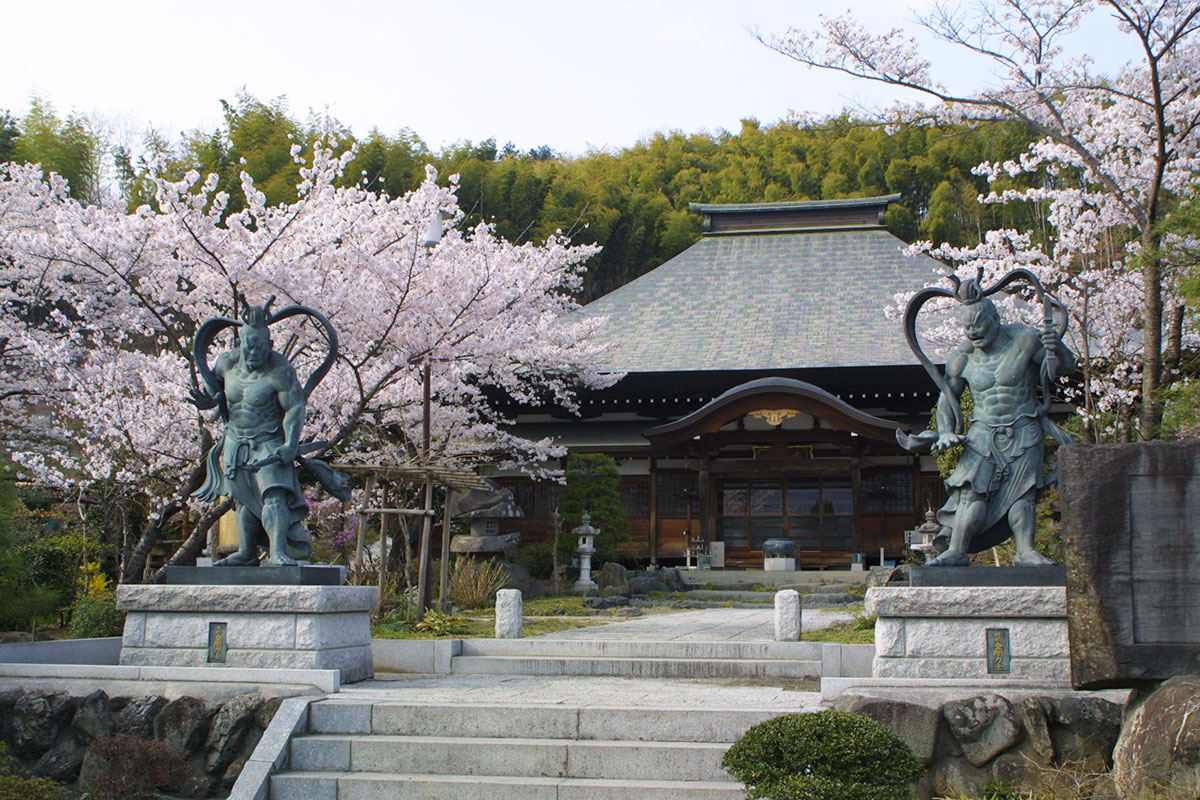
At temples along the Chichibu 34 Kannon Pilgrimage, travelers can receive an ornate stamp called a goshuin. When the temples along a pilgrimage route, it is customary to recite a Buddhist sutra, offer a copy of a sutra to the temple, or make a donation to have a sutra copied on your behalf. As a record of the offering, Pilgrims can then receive a goshuin with information such as the date, the name of the temple, and the principal image enshrined there. After the pilgrimage was finished, the full set of stamps could be displayed as proof of the journey. Collecting goshuin is still popular today.
In order to receive goshuin, it is necessary to have a special notebook called a goshuin-chō. These small notebooks are sold at many temples and are generally decorated with images and patterns that relate to the temple they came from. There are two main types of goshuin-chō: the first has an accordion-style binding called jabara, meaning “snake’s belly.” The jabara type is especially convenient for displaying a full set of goshuin. The second type, watoji (traditional stab binding), is sewn together with thread and opens like a book. goshuin-chō are available for ¥1,500 at 22 of the 34 temples along the pilgrimage route and come with that temple’s stamp already included.
Receiving a Goshuin (Temple Stamp)
- Before entering the temple, stop just outside the main gate. Remove your hat (if you are wearing one) and bow. When stepping through the gate, take care to step over the threshold rather than onto it.
- Just inside the gate, there may be a temizuya, a small pavilion with a fountain. The fountain waters are used for a preparatory self-purification ritual. Using the ladle, rinse each of your hands, then pour a small amount of water into your left hand and rinse the inside of your mouth.
- Approach the main hall (hondō) where the statue of Kannon is enshrined, and make a small donation by tossing money into the slatted offertory box in front. According to tradition, offerings of ¥25, ¥41, or ¥45 are considered especially lucky, as are ¥5 and ¥50 coins.
- Place your palms together, fingers upward, and bow your head.
- Proceed to the building where goshuin are offered, called the nōkyōjō, and hand your goshuin-chō to the attendant. If you do not have a goshuin-chō, you can purchase one with the temple stamp already included. Otherwise, you can request either a piece of paper with the temple’s stamp on it for ¥200 or have the monks write a more elaborate message (osho-ire) directly into your notebook for ¥300. If you are wearing a traditional sleeveless white jacket (oizuru) or carrying a pilgrim’s staff (kongōzue), you can have the goshuin stamped on either of those as well. The attendant will not be able to offer change, so be sure to pay the exact price. Many pilgrims bring dozens of ¥100 coins for buying goshuin along the route.
goshuin are available year-round from 8:00 a.m. to 5:00 p.m., but during the winter months (November to February), the nōkyōjō closes an hour early, and Jigenji (#13) and Jōrakuji (#11) close at 3:00 and 4:00 p.m., respectively.
History and Origin of Goshuin (Temple Stamps)
The practice of collecting temple stamps is believed to date back to the early thirteenth century with the creation of the “66 Places” (rokujūrokubu) pilgrimage. This pilgrimage was completed by offering a copy of the Lotus Sutra to a particular temple in each of the 66 provinces that made up Japan at the time. By the Edo period (1603–1867), when a pilgrimage boom began and tens of thousands of travelers came to Chichibu each year, the custom of dedicating copies of sutras had largely fallen out of fashion. The temple stamps, however, were wildly popular.
Until 1868, when the Meiji government ordered the separation of all Buddhist and Shinto institutions, the two religions were integrated, and most forms of worship could be practiced at both Buddhist temples and Shinto shrines. For example, it was not uncommon for Buddhist deities and Shinto kami to be enshrined together or viewed as manifestations of each other. Goshuin are often available at both temples and shrines, but in recognition of the official separation, some purists prefer to separate goshuin into different notebooks. Likewise, certain temples and shrines outside Chichibu may refuse a goshuin-chō that contains a stamp from a different religious tradition. The stamps often include small depictions of Buddhist or Shinto deities that should not be “enshrined” together in the notebook. Ultimately, whether to keep goshuin separate or not is a matter of personal preference.


